The first proper heatwave of the season is the worst time to find out your air conditioner has a problem, and it is also the busiest time to try and get someone out to fix it. Every year the pattern is the same: the calls start the day it hits 38°C, and by then everyone with a struggling system is calling at once. A bit of servicing beforehand avoids that entirely.
What actually goes wrong over a year of use
Air conditioners do not usually fail outright, they fail gradually, and most of what I find on a pre-summer service falls into a few categories:
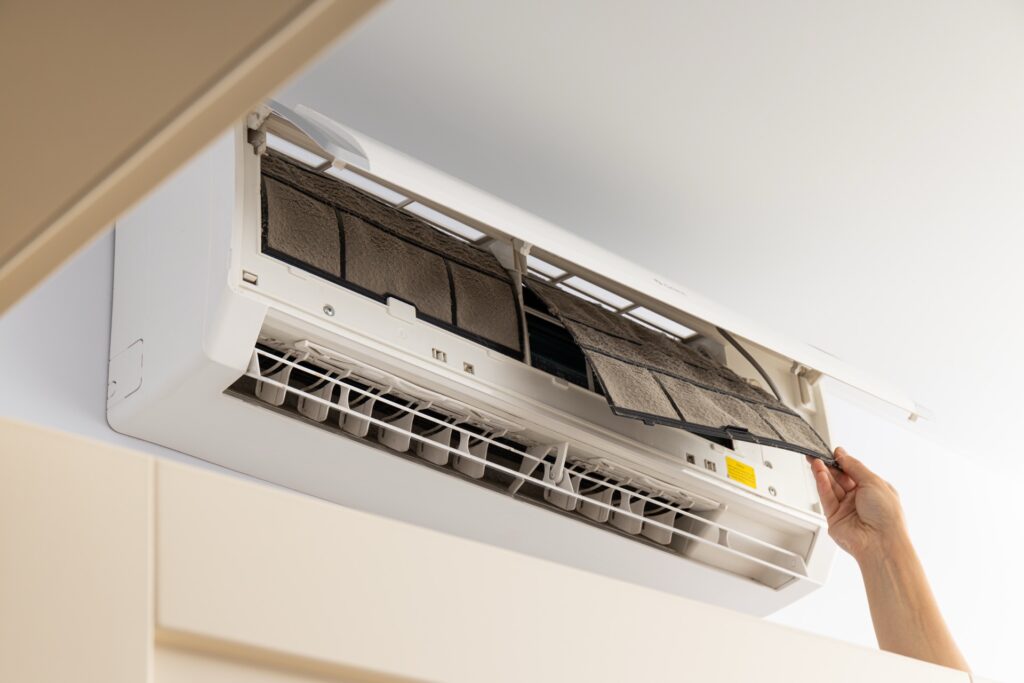
- Clogged filters — the single biggest cause of a system that runs constantly but does not cool well. A dirty filter restricts airflow, makes the unit work harder for a worse result, and pushes your power bill up in the process.
- Low refrigerant or a slow leak — shows up as a system that cools fine for twenty minutes then tapers off, or ices up on the indoor coil.
- Blocked or dirty outdoor condenser — dust, leaves and grass clippings build up on the outdoor unit over a year and reduce how well it can dump heat, which matters a lot more once ambient temperatures are already in the high 30s.
- Drainage issues — a blocked condensate drain is what causes water dripping from an indoor unit, and it is a five-minute fix if caught early rather than a ceiling repair if it is not.
None of these are dramatic on their own, but on the hottest day of the year they are the difference between a system that copes and one that does not.
Why the timing matters more in Western Sydney
Because Western Sydney sits well away from the coastal sea breeze, our summer days run consistently hotter than the rest of the city, and heatwaves tend to stretch longer before they break. That means an air conditioner here does not get the easy days a coastal system gets to coast through — it is under real load far more often, which is exactly the condition that exposes a system that has not been looked at in a while. A unit that is 80% efficient because of a dirty filter is an annoyance on a mild day and a genuine problem when it is 42°C outside and needs to hold that gap all afternoon.
If you are installing a new system rather than servicing an existing one, the same logic applies to timing: booking an installation in spring, before the heat arrives and before everyone else is calling, means you are not choosing between waiting weeks or making do with fans through the first hot spell.
What a proper service covers
A pre-summer service on a split system or ducted system should include a filter clean or replacement, a check of refrigerant levels and pressures, a clean of the outdoor condenser coil, a check that the condensate drain is running clear, and a test of the system under load rather than just switching it on and listening for noise. If anything is found, you should get a plain-English explanation of what it is and what it will cost to fix, not an automatic push toward a full replacement.
Refrigerant work is carried out under ARCtick authorisation, and if a fault turns out to be more than a service can fix, you get an honest read on repair versus replace before any decision is made.
The simplest thing you can check yourself
Between services, pull the filter out and check it every couple of months over summer, especially if anyone in the house has allergies or you are near a lot of trees or grass. It takes two minutes and it is the one piece of maintenance that genuinely affects both how well the system cools and what it costs to run.
If your system has not been looked at this year, or it is already showing early signs of struggling, get it seen to now rather than waiting for the first heatwave. I cover servicing and repairs across Penrith and Western Sydney and would rather find a small issue in September than a bigger one in January.